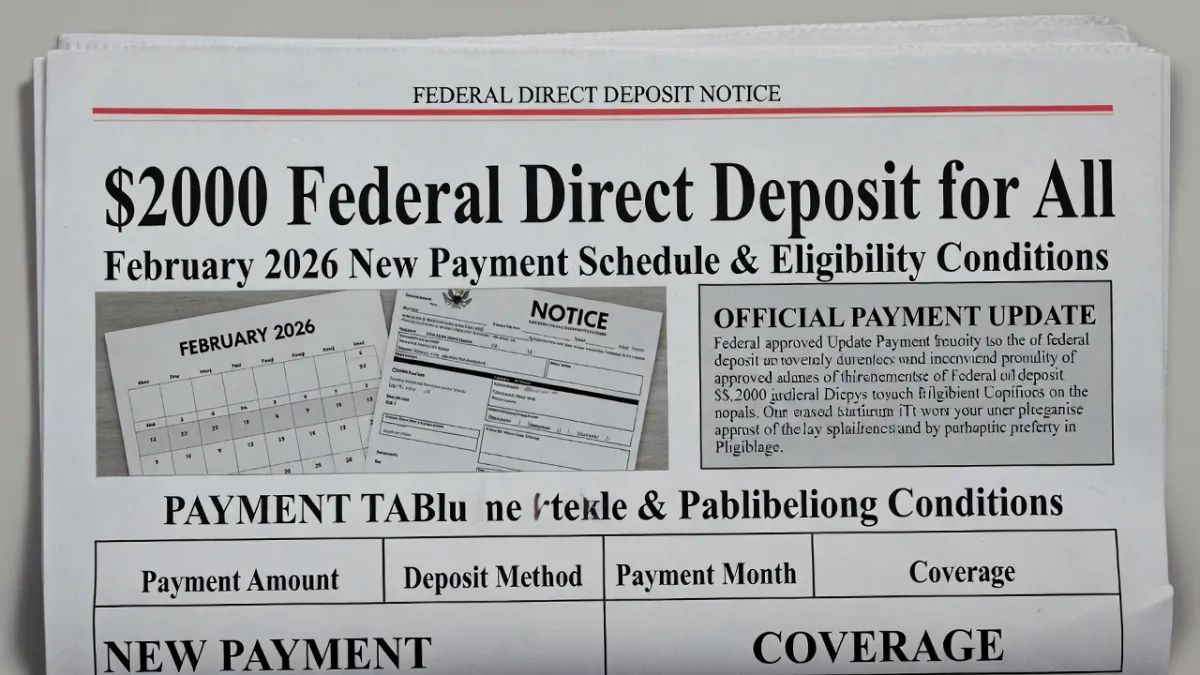
$2000 Federal Payment Discussion – As 2026 gets underway, chatter about a possible $2,000 federal direct deposit is everywhere. Social media posts, headlines, and forwarded messages keep repeating the same idea: “$2,000 for everyone.” For many Americans dealing with high rent, grocery prices, insurance premiums, and medical bills, that kind of money sounds like a real lifeline. At the same time, the nonstop buzz has also created a lot of confusion about what’s real and what’s just talk.
Unlike the stimulus checks sent out during the pandemic, this payment has not been officially approved. February 2026 keeps coming up mainly because of tax season timing and federal budget discussions—not because a payment is locked in.
Why the $2,000 Payment Is Back in the Conversation
The idea didn’t come out of nowhere. Even though inflation isn’t rising as fast as it did a few years ago, everyday costs are still painfully high. Housing, food, utilities, and healthcare continue to eat up a big chunk of household income. For many workers, paychecks haven’t fully caught up with those costs.

Because of that gap, some lawmakers and policy groups believe a one-time cash payment could offer short-term relief. The appeal is simple: direct cash is fast, flexible, and doesn’t come with complicated rules. People can use it where they need it most.
The Political Side of the Proposal
Politics plays a big role in keeping this idea alive. With elections approaching, cost-of-living concerns are front and center. Direct payments are easy to explain and easy for people to feel right away, which makes them politically attractive.
Supporters see the payment as a clear signal that the government is responding to financial pressure. Critics, however, argue that a visible action isn’t the same as a long-term fix. That disagreement is a big reason the proposal keeps circulating without turning into law.

Where Things Actually Stand Right Now
As of February 2026, there is no approved law authorizing a $2,000 federal direct deposit. Neither Congress nor the administration has finalized a bill, and agencies like the Internal Revenue Service and the Department of the Treasury cannot send out payments without legal approval.
What exists right now are ideas, draft discussions, and proposals that may or may not survive budget negotiations. Until a bill is passed and signed, no payment is guaranteed.
Why February 2026 Keeps Getting Mentioned
February sounds appealing because it lines up with tax season. The IRS is already processing millions of refunds, so administratively it feels convenient. But convenience doesn’t equal confirmation.

Budget fights, funding limits, and political disagreements can easily delay or cancel proposals altogether. February remains a possible window, not a promised date.
Who Might Qualify If a Payment Is Approved
Despite the phrase “$2,000 for all,” most serious proposals include income limits. Eligibility would likely depend on adjusted gross income, tax filing status, and residency—similar to past relief programs.
U.S. citizens and qualifying legal residents with valid Social Security numbers would likely be first in line. Seniors receiving Social Security, along with SSI and SSDI beneficiaries, are often mentioned in draft discussions. Higher-income households might see reduced payments or none at all.

How Payments Would Likely Be Sent
If a payment were approved, it would almost certainly use systems already in place. Direct deposit would be the fastest option, based on banking information on file with the IRS or Social Security.
People without direct deposit details would likely receive paper checks or prepaid debit cards, which usually take longer. Keeping bank and address information up to date is always a smart move.
Supporters vs. Critics
Supporters argue the payment could help families catch up on rent, pay overdue bills, or cover medical expenses. Some economists also point out that extra spending could help local businesses.

Critics worry about inflation, rising federal debt, and whether broad payments are the best use of funds. These concerns make lawmakers cautious about moving forward.
What to Do Right Now
The smartest approach is caution. Don’t budget around money that hasn’t been approved. Be skeptical of social media claims promising guaranteed deposits. File taxes on time, keep your information updated, and watch for official announcements.
Disclaimer
This article is for informational purposes only and should not be considered financial, legal, or tax advice. As of February 2026, no $2,000 federal direct deposit has been officially approved or authorized by law. Payment amounts, eligibility rules, and timelines may change if legislation is proposed, amended, or passed. Readers should rely only on official updates from Congress, the U.S. Department of the Treasury, the Internal Revenue Service, and the Social Security Administration for accurate and current information.