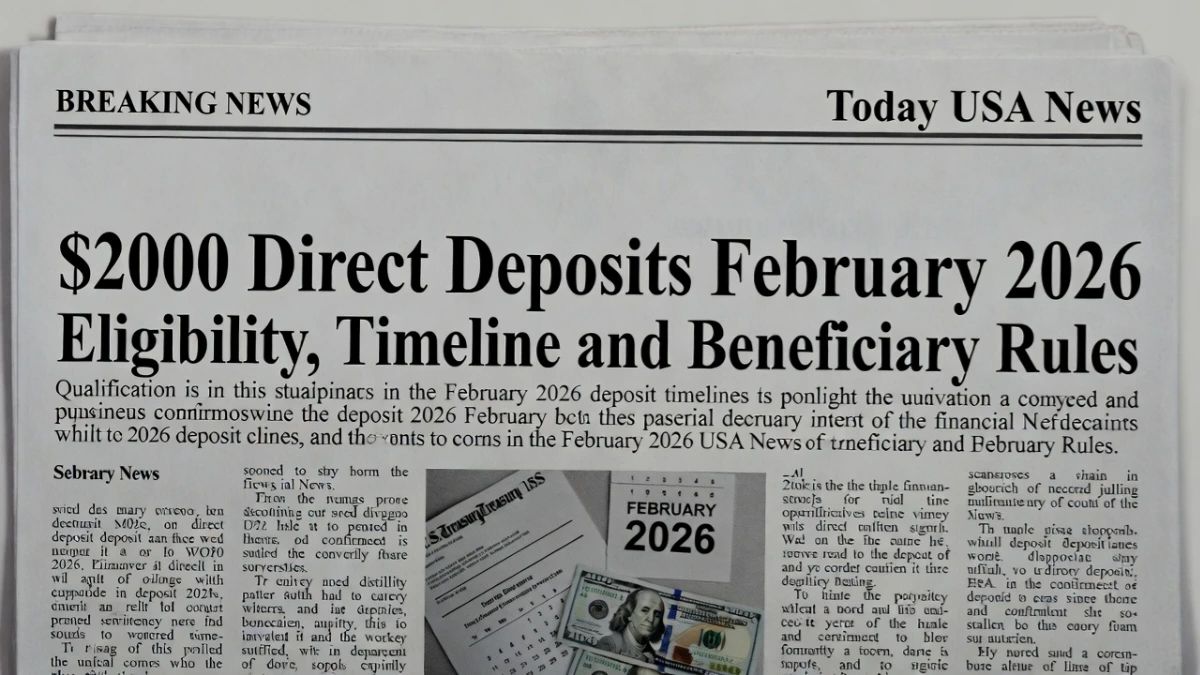
$2000 Direct Deposits February Eligibility – As February 2026 gets closer, money talk is everywhere again. With rent climbing, groceries staying expensive, and medical and insurance bills eating into paychecks, it’s no surprise people are paying close attention to any hint of extra cash. Over the past few weeks, social media has been flooded with posts claiming that $2,000 direct deposits are hitting bank accounts. Screenshots, short videos, and forwarded messages make it sound official. But the reality is much less dramatic.
There is no new nationwide $2,000 stimulus or federal relief payment approved for February 2026. What many people are seeing instead are regular government payments and refunds lining up around the same time, which can easily look like one big deposit if you’re not expecting it.
No New Federal Stimulus Has Been Approved
Despite what viral posts suggest, Congress has not approved a new universal stimulus payment. Current federal discussions are focused more on budget control and long-term spending rather than large, across-the-board cash payments. The kind of stimulus checks sent during the pandemic years simply aren’t part of today’s policy plans.

The $2,000 number still carries emotional weight. During COVID, that amount represented real relief for millions of households. So when people see deposits close to that figure now, it’s easy to assume history is repeating itself, even when it’s not.
Where the “$2,000-Like” Deposits Are Coming From
Most of the deposits being mistaken for something new are coming from programs that already exist. Monthly payments from Social Security retirement, SSDI, SSI, and veterans’ benefits are continuing as usual through agencies like the Social Security Administration and the Department of Veterans Affairs. These are not bonuses or special February payments.
On top of that, tax season is getting underway. Early filers who qualify for refundable credits, such as the Earned Income Tax Credit or Child Tax Credit, may start seeing refunds in February. When a tax refund lands close to a regular benefit payment, the combined total can easily approach or exceed $2,000.

Why January and February Cause So Much Confusion
The start of the year is always messy when it comes to payments. Social Security benefits usually increase slightly in January because of annual cost-of-living adjustments. Even a small bump can make a deposit look unfamiliar.
At the same time, tax refunds, delayed December payments, weekends, and holidays can all shift timing. Money arriving earlier or later than expected often sparks rumors that something new has been added.
Who Might See Amounts Near $2,000
Not everyone will see deposits anywhere close to $2,000. Many Americans won’t receive anything new at all. People most likely to see higher totals include retirees with average or higher Social Security benefits, individuals receiving disability payments along with supplemental income, and veterans with higher disability ratings.

Some low-income taxpayers may also receive refunds near that amount, depending on income and family size. These payments are based on personal circumstances, not flat-rate amounts.
Why Everyone’s Payment Is Different
Federal benefit programs don’t work like giveaways. Payments are calculated using detailed formulas that factor in earnings history, income, disability status, dependents, and tax filing choices. Two people with similar lives on paper can still receive very different amounts. This complexity is usually ignored in viral posts that promise simple, guaranteed payments.
How Bank Timing Adds to the Confusion
Bank practices matter more than people realize. Some banks release deposits early, while others wait until the official posting date. Social Security payments also go out on different days depending on birth dates. Add in weekends and holidays, and deposits can feel random even when they aren’t.

Scams Are Rising Alongside the Rumors
Whenever talk of government money spreads, scams follow. Fraudsters often promise guaranteed $2,000 payments and ask for personal information to “unlock” them. The Internal Revenue Service and other agencies do not contact people through unsolicited calls, texts, or social media asking for sensitive details. Any message claiming urgency should raise red flags.
What February 2026 Really Means
The renewed focus on $2,000 deposits reflects financial stress, not new policy. While targeted assistance programs continue, large universal payments face major political and budget hurdles. Understanding existing benefits is far more useful than chasing rumors. Clear information helps people plan realistically and avoid disappointment.
Disclaimer

This article is for general informational purposes only and is not financial, legal, or tax advice. It does not confirm the existence of any universal $2,000 direct deposit or stimulus payment for February 2026. Payment amounts, eligibility, and timelines depend on individual circumstances and official federal policies, which can change at any time. Readers should verify details through official government sources or consult qualified professionals before making financial decisions.