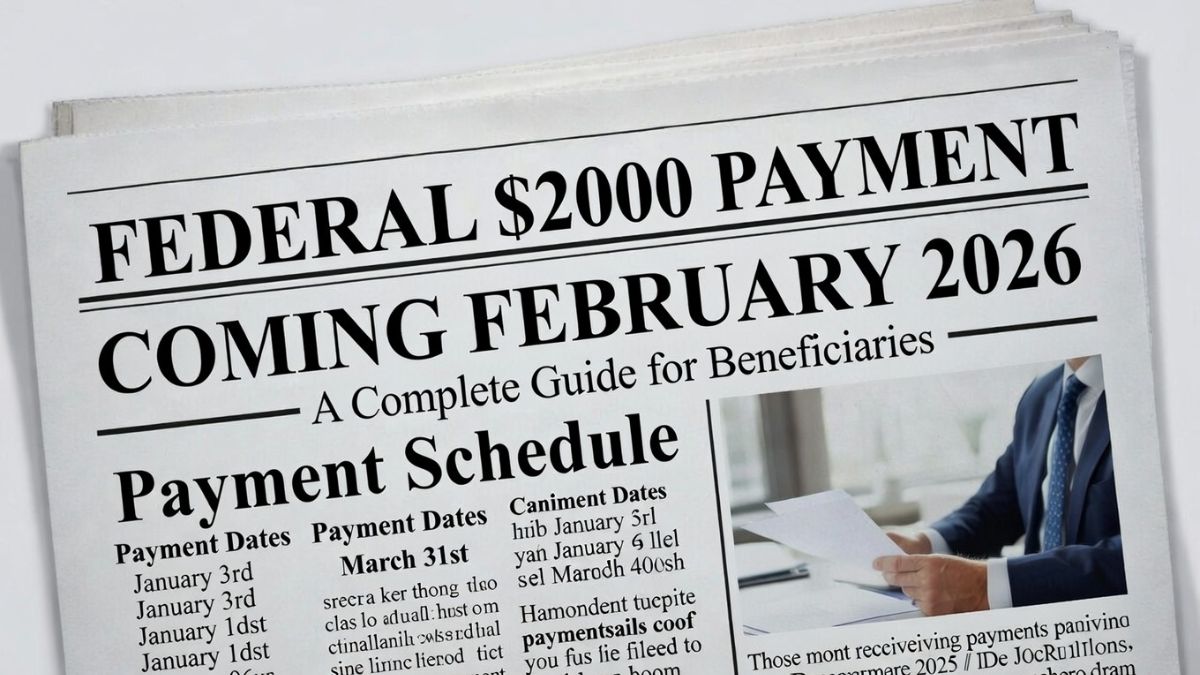
Federal $2000 Payment Coming February – As February 2026 gets closer, conversations about a possible federal $2,000 payment are picking up speed across the United States. Retirees, people receiving disability benefits, and low-income households are seeing posts online that suggest direct financial help could be coming soon. For many Americans, the idea feels hopeful. Even though inflation has cooled compared to previous years, the cost of everyday living still feels heavy for families relying on fixed or limited incomes.
For people who depend on monthly benefits, money often runs tight well before the month ends. Rent, groceries, prescription drugs, insurance premiums, and utility bills continue to inch upward. Against this backdrop, a one-time $2,000 payment sounds like meaningful breathing room. Still, it’s important to separate hope from confirmed facts. As of now, no federal law has been passed and no official payment date has been announced.
Why the Idea of a $2,000 Federal Payment Is Resurfacing
The renewed interest in direct federal payments isn’t random. Over the past few years, many Americans have shared concerns that official economic numbers don’t match real life. While cost-of-living adjustments and benefit increases have helped somewhat, many recipients say those changes don’t fully cover rising expenses.

Lawmakers are hearing those concerns. Instead of broad stimulus programs like those seen during the pandemic, recent discussions focus on targeted financial relief. The idea is to support people under the most financial pressure without adding massive strain to the federal budget. These conversations have sparked speculation, even though no formal plan has moved forward yet.
What Is Actually Confirmed So Far
Despite confident claims online, there is currently no confirmed federal $2,000 payment scheduled for February 2026. No bill has been approved, no law has been signed, and no federal agency has announced a rollout. Government payments cannot happen without authorization from Congress, no matter how popular the idea becomes online.
Much of the confusion comes from informal policy discussions and political commentary. These are often misunderstood as official decisions. Until legislation is introduced, debated, passed by Congress, and signed into law, any $2,000 payment remains an idea—not a promise.

How Online Rumors Create False Expectations
Social media plays a major role in spreading payment rumors. Posts with bold headlines, dramatic language, or screenshots claiming “approved payments” often circulate quickly. Many of these posts don’t include reliable sources, but they still feel convincing, especially when shared repeatedly.
This cycle is common during times of financial stress. When people are struggling, hopeful news spreads fast. Unfortunately, false expectations can lead to disappointment and poor financial planning. Some people delay paying bills or making decisions because they expect money that never arrives.
Who Might Qualify If a Payment Is Approved
If lawmakers eventually approve a payment, eligibility would likely be limited. Early discussions suggest that Social Security retirees, SSI and SSDI recipients, and possibly certain veterans could be prioritized. These groups are already part of federal benefit systems, which would make payments easier to distribute.

This approach would be very different from earlier stimulus checks that went to a wide range of taxpayers. The focus now appears to be on financial need rather than broad coverage. That said, no eligibility rules have been finalized, and nothing is official at this stage.
How a Real Payment Would Be Delivered
If a legitimate payment program is approved, it would almost certainly use existing government systems. Direct deposit would likely be the fastest method, especially for people already receiving federal benefits. Paper checks could still be an option, but they would probably take longer to arrive.
It’s also important to remember how real government payments work. No official program would require people to apply through text messages, emails, or social media links. There would be no fees involved and no requests for personal or banking information outside of official government channels.

Public Reaction: Hope Mixed With Caution
Public reaction to the idea of a $2,000 payment is mixed. Many seniors and low-income families feel that their financial struggles are finally being acknowledged. Online discussions often include real stories about choosing between groceries and medicine or putting off medical care because of cost.
At the same time, many people remain cautious. Past experiences with delayed payments, changing rules, or misleading headlines have made some Americans skeptical. Federal agencies have also warned repeatedly about scams tied to payment rumors, reminding people to rely only on official announcements.
How This Proposal Differs From Past Stimulus Checks
One major difference between this proposal and earlier stimulus checks is intent. Pandemic-era payments were designed for speed and wide distribution during a national emergency. The current discussions are more controlled and focused.

Lawmakers are now balancing financial support with budget concerns. Political divisions and long-term debt worries make large-scale payments harder to approve. Any new program would likely be smaller, more targeted, and tied to strict eligibility rules.
What to Expect in the Coming Months
As 2026 moves forward, it should become clearer whether this idea gains real momentum or quietly fades away. If a bill is introduced, details about eligibility, timing, and payment methods would follow. Political negotiations and budget priorities will play a major role in shaping any outcome.
Until something is officially approved, experts strongly advise against planning finances around an unconfirmed payment. The safest approach is to stay informed through reliable news sources and official government statements. Hope is understandable, but caution is necessary.

The idea of a federal $2,000 payment reflects real financial pressure faced by millions of Americans. While the discussion highlights ongoing affordability challenges, it does not equal confirmation. Right now, the payment remains a possibility—not a guarantee.
Disclaimer
This article is for informational purposes only and does not provide financial, legal, or tax advice. Any federal payment program must be approved by the U.S. Congress and officially implemented by government agencies before it becomes real. Details discussed here are based on public discussions and unconfirmed proposals, which may change at any time. Readers should rely on official government announcements and trusted news sources for accurate and up-to-date information.