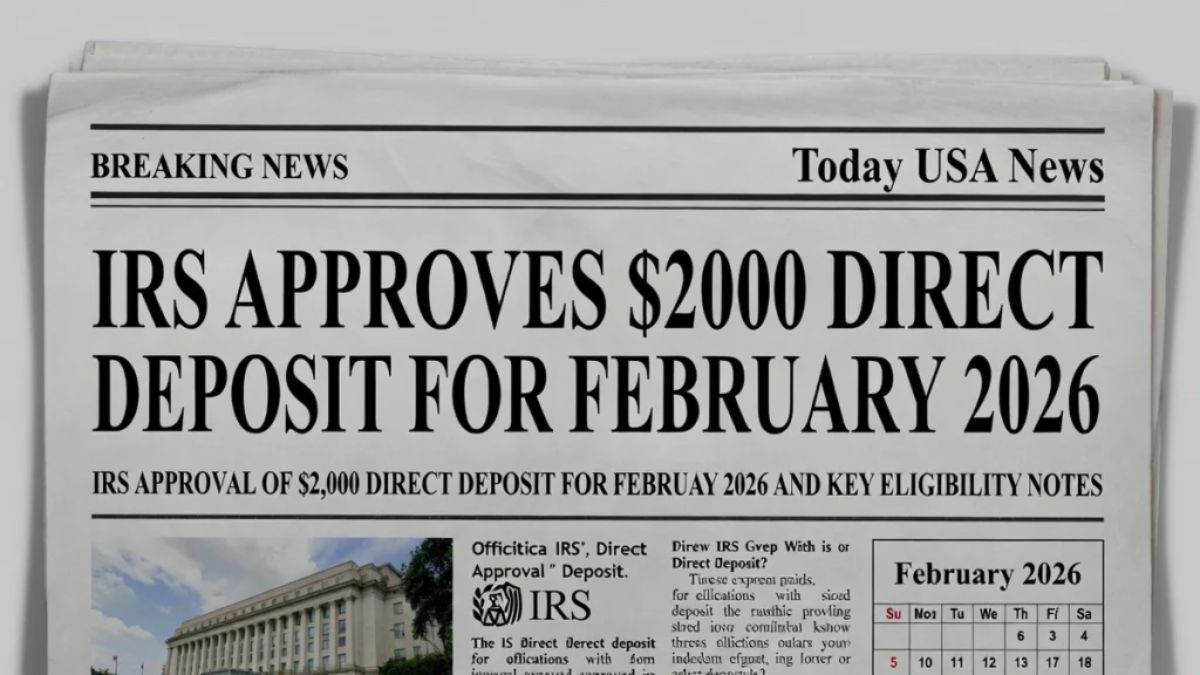
IRS Approves $2000 Direct Deposit – Over the past few weeks, headlines and social media posts claiming that the IRS has approved a $2,000 direct deposit for February 2026 have spread quickly. From Facebook posts to WhatsApp forwards and smaller news blogs, the message sounds confident and reassuring. For families struggling with higher rent, grocery prices, and everyday expenses, the idea of another government payment feels like a lifeline. But despite how widely the claim has circulated, the reality is far less certain. As of now, there is no confirmed or approved $2,000 IRS payment scheduled for February 2026.
What’s driving the confusion is not an official IRS announcement, but a mix of political statements, online speculation, and memories of past stimulus checks. Many people remember how quickly pandemic-era payments were rolled out and assume something similar is happening again. However, the IRS has not issued any notice, guidance, or payment schedule related to a new $2,000 deposit. Without congressional approval, the IRS cannot legally send out money, no matter how convincing the headlines sound.
Where the $2,000 Payment Story Started
The idea behind the rumored $2,000 payment can be traced back to comments made during political speeches and policy discussions about tariffs. Tariffs are taxes placed on imported goods, and they generate billions of dollars in revenue for the U.S. government each year. At one point, the president suggested that some of this money could theoretically be returned to taxpayers as a one-time dividend.

That single suggestion, loosely explained and never backed by legislation, quickly took on a life of its own online. Some websites began presenting it as a done deal, while others labeled it as the “next stimulus check.” Neither description is accurate. Unlike previous relief payments, this idea has not been written into a bill, debated in Congress, or approved as part of a federal budget. It remains a concept, not a program.
Why the IRS Has Not Made Any Announcement
The silence from the IRS is one of the clearest signs that no payment is currently in motion. In past stimulus programs, the IRS was highly visible. It updated its website, released FAQs, mailed official letters, and provided online tools for tracking payments. None of that has happened this time.
Tax experts point out that this silence is intentional and meaningful. The IRS cannot act unless Congress passes a law authorizing payments and providing funding. According to tax professionals, when a benefit is real, the IRS communicates clearly and early. The absence of official guidance strongly suggests there is nothing operational to announce. Political ideas and campaign messaging do not automatically turn into IRS action.

Who Might Qualify If a Payment Ever Becomes Real
Even though nothing has been approved, analysts often look to past programs to estimate what eligibility could look like if a tariff-based payment were ever passed into law. In that scenario, eligibility would likely be based on existing IRS records. Individuals with valid Social Security numbers who file federal tax returns would probably be included.
Income limits would almost certainly apply, reducing or eliminating payments for higher earners. Families with children might receive additional amounts, while individuals claimed as dependents could be excluded. Retirees receiving Social Security benefits might also qualify, especially if their income is already reported to the IRS. Still, it’s important to stress that these are assumptions, not rules. Without legislation, there is no official eligibility framework.
Why Online Hype Can Be Risky for Households
The public reaction to the rumored payment has been mixed. Some people are hopeful, while others are skeptical. Many Americans still remember how stimulus checks during 2020 and 2021 arrived quickly and helped cover urgent bills. That experience makes it easy to believe similar help is coming again.

Financial advisers say the real danger lies in acting on unverified information. Some individuals are delaying tax filings, postponing bill payments, or planning expenses around money that may never arrive. That can lead to penalties, late fees, or budget shortfalls. When expectations are built on rumors instead of official confirmation, the financial consequences can be very real.
Why This Is Not the Same as Past Stimulus Checks
Comparisons to earlier stimulus payments are understandable, but misleading. During the pandemic, Congress passed emergency relief packages under extraordinary circumstances. Those laws clearly spelled out who qualified, how much they would receive, and when payments would be sent. Government websites and official channels provided constant updates.
The current situation is completely different. The tariff dividend idea is not tied to an emergency, has not gained bipartisan support, and has not moved through the legislative process. Calling it a “fourth stimulus check” creates expectations that simply do not match the current political and economic environment.

What Could Happen Next From a Policy Perspective
Looking ahead, policy experts believe the idea could resurface during election campaigns or budget negotiations, especially as lawmakers discuss how to use tariff revenue. Proposals that promise direct cash to voters tend to attract attention. However, turning that attention into action is another matter entirely.
Any real movement would require detailed cost estimates, committee hearings, and approval from both chambers of Congress. Analysts note that once lawmakers examine how tariff revenue is already allocated, enthusiasm for redistribution often fades. For now, continued discussion is far more likely than immediate payments. If anything is approved, the announcement will come directly from official government sources and will be hard to miss.
What People Should Do Right Now
For the moment, the best approach is caution. Taxpayers should continue filing returns on time, budgeting based on confirmed income, and ignoring claims that do not come from official IRS or government channels. If a new payment is ever approved, the IRS will clearly explain eligibility, timing, and delivery methods.

Until that happens, February 2026 should be treated like any other month, not a guaranteed payday. Staying informed through reliable sources is the best way to avoid disappointment and financial missteps.
Disclaimer
This article is based on publicly available information, expert commentary, and current policy discussions at the time of writing. As of now, no $2,000 IRS direct deposit for February 2026 has been officially approved, announced, or confirmed by the U.S. government or the Internal Revenue Service. Readers should rely only on verified IRS statements and official government releases when making financial decisions. Political proposals, online claims, or speculative reports should not be treated as guaranteed benefits.