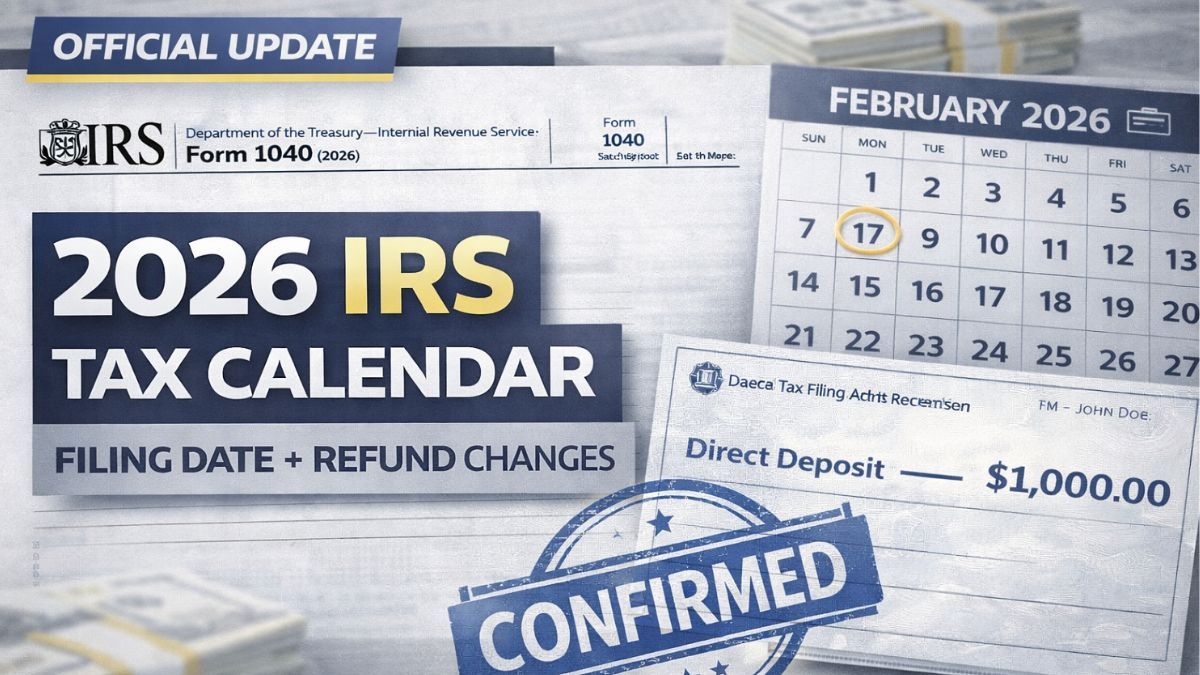
IRS Confirms 2026 Tax Calendar – The Internal Revenue Service has officially confirmed the tax calendar for the 2026 filing season, and while the core dates look familiar, the overall approach is noticeably stricter and more structured than in previous years. The focus has shifted toward early preparation, accurate filing, and disciplined timing. For many Americans, this change goes far beyond routine paperwork. Tax refunds are often built into household financial planning, and even a short delay can affect bill payments, savings plans, and overall stability during the first half of the year.
Understanding how the 2026 tax calendar works can help taxpayers reduce stress, avoid refund delays, and make smarter financial decisions.
Why the 2026 Tax Calendar Matters More Than Before
For millions of households, a tax refund is not “extra” money. It is commonly used to catch up on rent or mortgage payments, pay down credit card balances, manage vehicle repairs, or cover medical expenses. Because refunds are closely tied to essential needs, timing plays a critical role.

In 2026, the tax calendar is expected to be more tightly enforced. While deadlines have always existed, there is now less flexibility for late corrections or disorganized filing. Taxpayers who delay gathering documents or wait too long to submit their returns may experience longer processing times and fewer opportunities to fix errors without causing delays.
The IRS has also aligned its calendar more closely with verification systems and processing capacity. This means that returns filed early and correctly are more likely to move smoothly through the system.
Filing Season Dates and Their Impact on Refund Timing
The filing season is expected to open in late January 2026, with the standard deadline set for mid-April. Although these dates are familiar, their impact on refund timing is more significant than before.

Returns are processed in the order they are accepted, not the order they are prepared. Taxpayers who file electronically soon after the IRS begins accepting returns often see faster processing. In contrast, paper returns or returns submitted later in the season typically face slower review.
As the April deadline approaches, the IRS experiences a surge in filings. When millions of returns arrive at once, processing times increase and refund timelines become less predictable. Filing early helps avoid this bottleneck.
How Refund Processing Is Expected to Work in 2026
Refunds in 2026 will continue to be issued in phases rather than all at once. The speed of a refund depends on when the return is filed, how accurate it is, and whether it includes items that require additional review.

Electronic filing combined with direct deposit remains the fastest option. Returns submitted digitally with correct banking details generally move through the system more efficiently. Even small errors, such as an incorrect account number or mismatched personal information, can lead to delays.
Returns that claim certain credits or require identity verification may take longer to process. These reviews are part of fraud prevention measures, making accuracy and timing even more important.
The Risks of Filing Too Close to the Deadline
Waiting until the final days before the deadline increases the risk of problems. Missing documents, incorrect income entries, or mismatched forms may be harder to correct quickly when time is limited.

Late filing can also lead to penalties if taxes are owed. Interest and late fees begin accruing after deadlines pass, and enforcement is expected to be firmer in 2026. Beyond financial risk, last-minute filing often leads to stress and a higher chance of errors, which are a common cause of refund delays.
How Early Filing Supports Better Financial Planning
Filing early offers more than peace of mind. It allows households to plan with greater confidence. When a return is accepted early without issues, refund timing becomes easier to estimate.
February is often a financially tight month due to post-holiday expenses, heating bills, and insurance payments. Receiving a refund earlier can help stabilize cash flow and reduce reliance on credit cards or short-term borrowing.

Final Thoughts on the 2026 Tax Filing Season
The confirmed 2026 tax calendar sends a clear message: preparation and timing matter more than ever. Filing early, submitting electronically, and checking details carefully can improve refund speed and reduce uncertainty. Treating the tax calendar as a financial planning tool rather than a last-minute reminder can make the entire season smoother and less stressful.
Disclaimer
This article is for general informational purposes only and does not constitute tax, legal, or financial advice. Tax laws, filing dates, refund timelines, and IRS procedures may change due to official updates or policy decisions. Individual tax situations vary, and results may differ based on personal circumstances. Readers should verify information directly with the Internal Revenue Service or consult a qualified tax professional before making any tax-related or financial decisions.